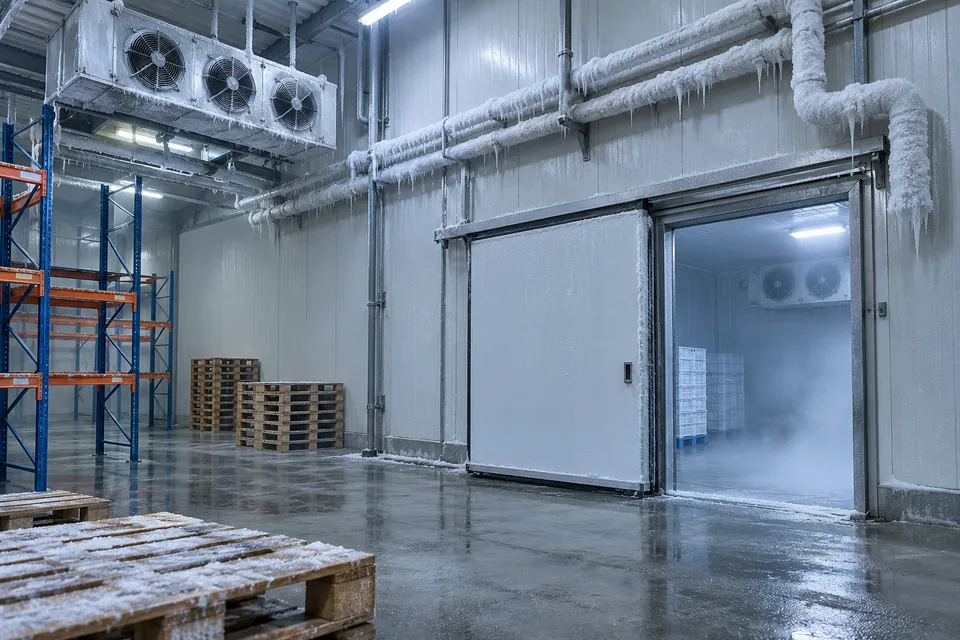
Five US government bodies have jointly warned that malicious cyber actors are going after the controllers that run industrial refrigeration and cold-chain monitoring equipment, with activity described as global. The target is the temperature control layer in retail grocery stores and cold storage warehouses. The stated worry is physical: a controller that can be reconfigured remotely can be made to spoil the stock behind it and create equipment hazards. The factsheet was released on 5 November 2026 by the Cybersecurity and Infrastructure Security Agency, the FBI, the Department of Health and Human Services, the Department of Agriculture and the Department of Transportation.
What the agencies are describing
The authoring agencies say the affected equipment is widely used in healthcare and public health, chemical, food and agriculture, and transportation. In those sectors the same class of device handles automated remote temperature watching, continuous logging, defrost scheduling and energy tuning, including on refrigerated transport.
According to the factsheet, the actors may take advantage of weaknesses in controllers that are unpatched or reachable from the internet, then change settings from afar. The behaviour it highlights is forcing units into a continuous heating and defrost loop.
The agencies name three ways in: authentication bypass, arbitrary code injection, and weak configurations. The document does not tie the activity to a named group, does not list affected vendors or products, and does not cite specific vulnerability identifiers. Defenders should read it as a warning about a class of exposed device, not as a bulletin for one product line.
Consequences the factsheet spells out
The listed outcomes are mostly physical. Altered temperatures could shorten the equipment’s service life, create a fire hazard, cause inventory loss, or indirectly harm consumers if products are eaten after unsafe storage. The agencies add a second effect that is easy to overlook: loss of visibility into current temperatures, which they call a denial-of-view condition.
Analyst reading: the healthcare angle explains why the Department of Health and Human Services is on the author list and offers its own contact point for medical supply chain disruption. Vaccines, biologics and some drugs depend on unbroken temperature ranges, so a tampered cold room is a patient-safety problem before it is an inventory problem.
What is not stated
Several questions are left open by the document. It gives no count of affected sites, no timeline, no indication of whether any incident has caused confirmed spoilage or harm, and no attribution to a state or criminal group. It also does not say whether the weaknesses are newly found or long known. Treat the phrase “may exploit” as a statement about capability and intent that the agencies are acting on, not as a confirmed breach inventory.
Priorities for owners and operators
The agencies tie their recommendations to the Cross-Sector Cybersecurity Performance Goals from CISA and NIST. The agencies list eight actions, summarised below in their order.
First, remove public internet exposure. Controller panels should not be reachable directly from the internet. Where remote access is genuinely needed, put it behind a firewall or edge device that is kept on its latest version.
Second, separate operational technology from the business network, using a dedicated VLAN for controllers and monitoring gear. That limits what a compromised office laptop or phished account can reach.
Third, fix credentials. Replace default passwords, enforce strong password policy, and use phishing-resistant multifactor authentication wherever the platform allows it. Authentication bypass is on the agencies’ list of vectors, so a good password alone is not enough, which is why the next step matters.
Fourth, keep firmware current and plan for retirement. The factsheet asks for a structured lifecycle process that identifies end-of-life units no longer supported by the manufacturer and replaces them.
Fifth, restrict who can change settings. Maintain an allowlist of devices and IP addresses authorised to make changes.
Sixth, keep backups of configurations offsite and offline, and test restoring them.
Seventh, turn on logging and review it. Where an asset cannot produce usable logs, collect the network traffic between it and its neighbours instead.
Eighth, define sane setpoint limits for equipment downstream of the controllers and alert on deviations. A freezer that drifts out of range should raise an alarm whatever the cause.
Where to report
US organisations are asked to report suspicious or criminal activity to CISA’s 24/7 operations centre or to the FBI’s Internet Crime Complaint Center or a local field office, including the time, place, type of activity, number of people affected and equipment involved. Healthcare organisations facing supply disruption can contact the Department of Health and Human Services directly. The factsheet also points to CISA guidance on reducing internet exposure and securing edge devices, and to joint guidance on secure connectivity for operational technology.
Frequently Asked Questions
Are hackers targeting industrial refrigeration controllers? Five US agencies, CISA, the FBI and the Departments of Health and Human Services, Agriculture and Transportation, say malicious actors are targeting refrigeration and cold-chain monitoring controllers, with activity described as global. The factsheet names no group, vendor, product or vulnerability identifier, and reports no confirmed spoilage.
What could attackers do to a refrigeration controller? According to the factsheet, actors may change settings remotely and force units into a continuous heating and defrost loop. Listed outcomes include shortened equipment life, fire hazard, inventory loss and indirect consumer harm.
How do I protect cold-chain refrigeration controllers? The agencies list eight actions, led by removing public internet exposure and separating operational technology from the business network. The rest cover replacing default credentials, keeping firmware current, limiting who can change settings, keeping offline configuration backups, logging, and alerting on setpoint deviations.
Source: Cybersecurity and Infrastructure Security Agency (CISA). Source: FBI Internet Crime Complaint Center (IC3).